Baseboard and wall heaters are a common choice for rooms without central heating, additions, garages and older homes. They heat quickly and need no ductwork, but each heater is a high-load appliance. When heaters share a circuit, run on undersized wiring or are controlled by a failing thermostat, they trip breakers, heat unevenly or overheat.
We wire heaters on their own dedicated circuits, sized for the heater's wattage, and connect line-voltage or low-voltage thermostats so each room can be controlled properly. We also replace old heaters that have stopped working or become a safety concern.
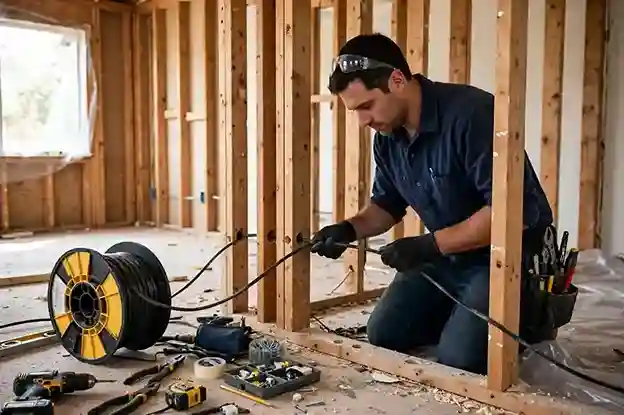
What’s included
Our baseboard and wall heater electrical work includes:
- Dedicated 120V and 240V circuits for baseboard and wall heaters
- Wiring for new heater installations in any room
- Line-voltage and low-voltage thermostat hookups and replacement
- Heater replacement, including safe removal of the old unit
- Circuit sizing and load checks so heaters do not overload the panel
- Smart and programmable thermostat installation for electric heat
- Safety inspection of existing heater wiring and connections
- Troubleshooting for heaters that will not heat, trip breakers or run constantly
Signs you need baseboard and wall heaters
You may need heater electrical work if:
- A heater does not heat at all, or only heats part of the room
- The breaker trips whenever the heater runs
- You smell burning dust or plastic near a heater that has been running
- The thermostat does not control the heater, or the heater runs constantly
- An old heater is noisy, discoloured or has damaged fins or wiring
- You are adding heating to a new room, addition or converted space
How it works
Heater work follows a clear process:
- 1. Tell us about the heater. Call (844) 957-4676 and describe the room, the heater and the problem, or the new heating you want installed.
- 2. On-site check and quote. We check the heater, the thermostat and the circuit, confirm the panel has capacity, and give you an upfront price.
- 3. Wiring and installation. We run the dedicated circuit, fit the heater and connect the thermostat, keeping clearances and code requirements in mind.
- 4. Test under load. We run the heater through a full cycle, check the thermostat controls it properly and confirm nothing overheats.
Safety first
Electric heaters get hot by design, so they need clear space around them. Never place furniture, curtains or bedding against a baseboard or wall heater, and never cover one. A heater wired to a shared or undersized circuit can overheat its wiring, which is why dedicated circuits matter.
If a heater smells of burning plastic, shows scorch marks or trips its breaker repeatedly, switch it off at the thermostat and the panel, and call an electrician before using it again.
Pricing
Every heater job is different, so we give upfront pricing before work begins. Call (844) 957-4676 for a quote. The price depends on the number of heaters, the circuit length from the panel, the type of thermostat and whether your panel has spare capacity. You will always know the cost before we start, and we accept Visa, Mastercard, American Express, Discover, PayPal and cash.
Frequently asked questions
Does a baseboard heater need its own circuit?
Yes. Baseboard and wall heaters draw a high, continuous load, so code requires a dedicated circuit sized for the heater. Sharing a circuit with other outlets or appliances causes tripping and overheating.
What is the difference between 120V and 240V heaters?
A 240V heater delivers the same heat with half the current, which means smaller wire, less voltage drop and more efficient operation. Most whole-room baseboard heaters run on 240V, while small heaters may use 120V.
Can I replace my old thermostat with a smart thermostat?
Often, yes. Electric heat uses line-voltage thermostats, which are different from the low-voltage thermostats used with furnaces. We can fit a line-voltage smart or programmable thermostat that works with your heaters.
Why does my heater trip the breaker?
The usual causes are an undersized circuit, a heater sharing a circuit with other loads, or a failing heater or thermostat. We test the circuit and the heater to find the cause before recommending a fix.
Is electric baseboard heating safe?
Yes, when it is installed correctly on a dedicated circuit with proper clearances. Problems come from DIY wiring, blocked heaters and worn-out units, which is why an inspection is worth it for older installations.
Related services
Electrical Installation
New circuits, outlets, switches, fixtures, ceiling fans and detectors, installed to code.
Wiring & Rewiring
New circuits, 240V wiring and whole-home rewiring to replace old or unsafe wiring.
Panel Upgrades
Replace an outdated or overloaded panel with 100A, 200A or larger service.
Smart Home Electrical
Smart switches, lighting control and automation-ready electrical upgrades.
Service areas
Local Emergency Electrician is headquartered in Los Angeles and serves homes and businesses across the United States, with services outside Los Angeles delivered through contractor agreements. Popular service areas include California, Los Angeles, CA, Texas, New York and Florida — see all service areas.
Need baseboard and wall heaters? Talk to an electrician today.
Call (844) 957-4676, Monday to Saturday, 8:00 AM to 6:00 PM, or request a quote online and we will get back to you.